


In 1944, Robert Maynard Hutchins looked at the GI Bill and saw ruin. The president of the University of Chicago warned that colleges would become “educational hobo jungles,” overrun by men who wanted a stipend more than an education. Harvard’s James Conant had his own doubts.
They were wrong. Veterans flooded campuses after the war, and by 1956 more than a million of them had attended college. People now quote Hutchins mostly to show how badly elite educators can misjudge students who arrive by an unfamiliar route.
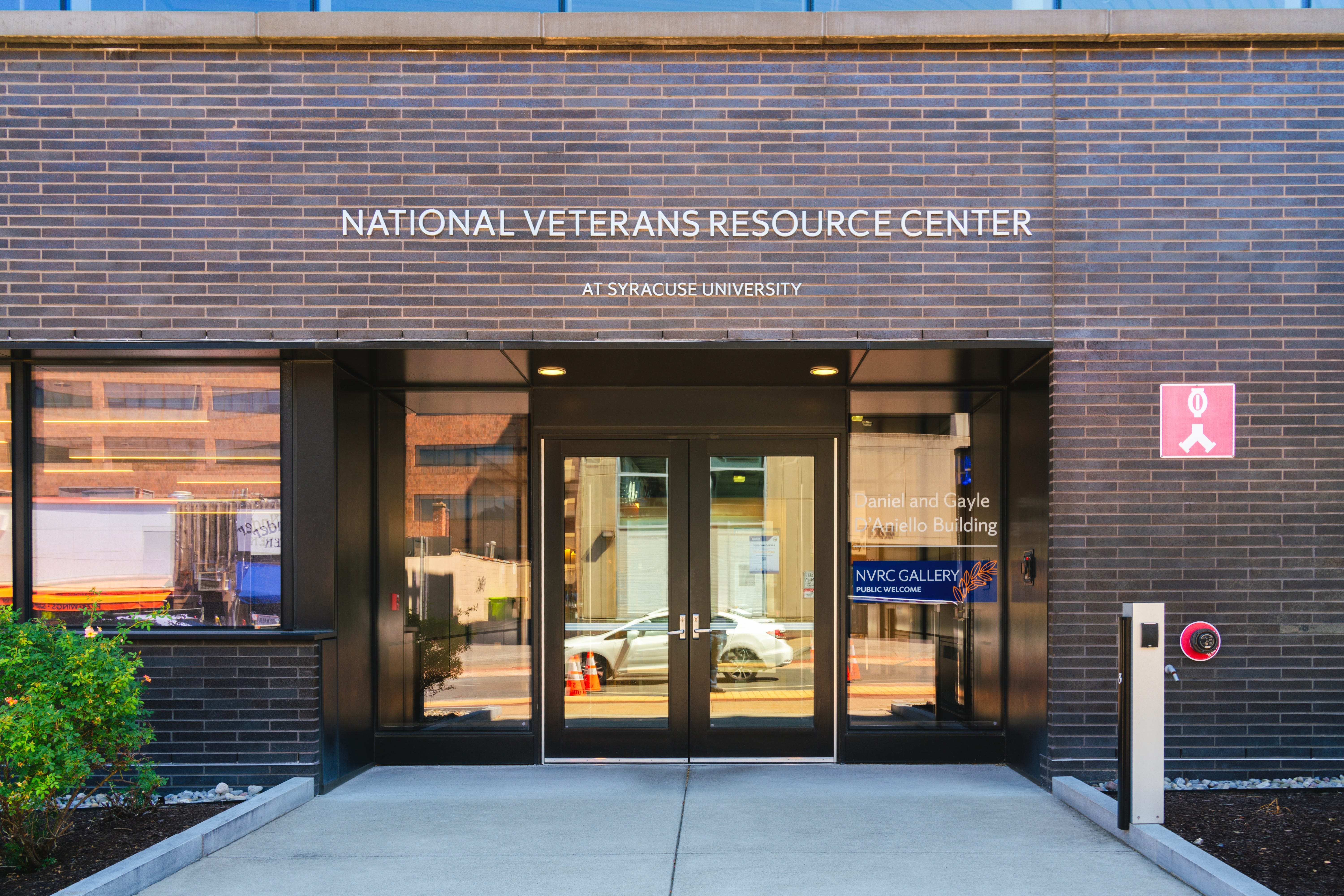
I bring it up on Veterans Day because colleges still haven’t fully answered the question behind his worry. What does someone who has carried a rifle or a medic’s bag bring to a seminar on Thucydides? At HxA we usually answer questions like that by talking about viewpoint diversity. So I went looking for what veterans have said about it. Their comments are more surprising than I expected. As Mark Street, a film professor at Fordham, once wrote, “those who were in uniform are not uniform.”
I’ve organized what I found into four parts: who student veterans are, what they add, what gets in their way, and what helps.
Who they are
Student veterans make up 3.7 percent of undergraduates nationally. Most are over 30, and on average they enroll nine and a half years after high school. Nearly half have children or other dependents, and more than half work full-time while they study. They are overrepresented at community colleges and still scarce at selective schools, where they often number in the dozens.
They have also done things most of their classmates haven’t. They have worked inside a large, rule-bound institution and served alongside people from every religious and ethnic background and every region in the country. Some have seen what a policy debated in a seminar looks like on the ground.
What they add
Politics that don’t sort neatly. Voters who are veterans lean Republican, 63 percent to 35, according to Pew. So it’s tempting to cast veterans as a conservative counterweight on liberal campuses, and Wesleyan president Michael Roth made a version of that case in the Wall Street Journal in 2017. But that can vary by issue; in 2019, for instance, 64 percent of veterans told Pew the Iraq war was not worth fighting, about the same share as the general public. At UC Santa Barbara, the veterans coordinator called the Veterans Resource Center “the most diverse place” on campus, with students ranging from far-left to far-right.
Firsthand knowledge. Jim Clark, who teaches history at the University of Central Florida, says veterans “can turn a dry lecture about Iraq or Afghanistan into an exciting discussion,” and that he can count on one to correct him when he gets a fact wrong. At Harvard, Ed Somuk, a retired Marine master sergeant, reminds classmates what many of them may end up doing after they graduate: “The people that do send us into conflict are usually graduates from Ivy League institutions like Harvard.” A future policymaker should hear that from someone who was sent.
Daniel Byman, who teaches security studies at Georgetown, wrote years ago that “discussions of life-or-death questions are far more real when veterans are in the classroom.” That holds in a community college ethics course as much as in a Georgetown seminar.
What gets in their way
The good news first: many veterans find campus friendlier than they expected. Michael Muir’s Marine friends warned him that Brown was “full of crazy snowflakes.” He found students “very open to asking me questions.” Ellen Moore, who interviewed student veterans for her book Grateful Nation, said none of them told her they felt unwelcome because of their service. Jimmy Hatch, a former Navy SEAL who enrolled at Yale at 52, wrote, “If this place is peopled by ‘snowflakes’ I’m proudly one of them.”
Still, veterans describe some recurring problems.
Not being asked. There are ugly episodes, like the Columbia students who jeered a wounded Iraq veteran at a 2011 town hall on ROTC, or the Brown students who in 2016 tore up flags veterans had planted for Veterans Day. More often, veterans simply aren’t asked what they think. Don Gomez, an Army veteran who studied at the City College of New York, heard professors casually treat the Iraq war as a “self-evident failure.” He found it painful, but he wasn’t asking professors to stop.
“Veterans certainly don’t need a trigger warning,” he wrote; “the idea of being warned before they’re offended is comical.” However, “not once did any of my professors ever ask, ‘Are there any veterans in the class?’” Gomez wanted “a fair chance at being heard.”
Pigeonholing. Once Gomez “outed” himself as a veteran, he wrote, he became the “Army guy.” Whenever the war or the military came up in class, “all eyes fall on you.”
Self-censorship. Nate Kreuter, a professor who has taught many veterans, wrote that some stayed quiet because classmates talked about war in “oversimplified, naïve terms,” or because they worried classmates “couldn’t handle” their views. Kreuter had other veteran students who, accustomed to the chain of command, deferred to him as instructor and needed explicit permission before they would disagree.
Too much deference. Moore found campus guidelines that “advised against holding classroom discussions about the wars” to avoid offending veterans. Some schools, including Ohio State and the University of Vermont, have set up special class sections that only veterans can take, going back to 2009. A Marine in a different section of that Ohio State course supported the idea, since with only veterans in the room, “we [veterans] could’ve been a little freer” in class discussions. That’s understandable. But when veterans talk about war only with each other, the civilian students down the hall never hear them.
What helps
Faculty can improve the situation by remembering to do a few simple things. For starters, ask whether there are veterans in the room. Tell them out loud that you want them to feel free to disagree with anything, since many spent years in jobs where contradicting the boss could cost them. And don’t ask any one of them to speak for the armed forces. As Marshall Thomas, a Marine veteran who runs veterans affairs for the Cal State system, says, “If you’ve met a veteran, you’ve met one veteran.”
Hatch, the former Navy SEAL, shows what it looks like when it works. He went on to help teach a Yale seminar on what war does to the people caught up in it. A student once told him, in a room that included ROTC cadets, “Jimmy, I do not support the U.S. military.” He took it as proof the seminar was working, because she felt safe saying it to his face. “I’ve seen courage on the battlefield,” he wrote, “and I now see it in GLBL 339.”
Hutchins worried that veterans would lower the tone of the university. He should have worried about what a university loses without them. A seminar on war where no one has seen one is missing a crucial viewpoint. So is a policy school where no one has carried out the kind of military policy its students will someday write.
So on Veterans Day, give veterans a seat at the table. Then listen to what they have to say, and feel free to disagree.
Thank you for this article. I think veterans have much to offer (as well as much to gain) in the college classroom. Your suggestions for engaging veterans in classroom discussions are right on target. Many veterans also find their way into higher education on the other side of the podium. Here is my experience as an administrator and teacher:
https://www.mindingthecampus.org/2024/11/11/a-veterans-journey-from-the-air-force-to-academia/