


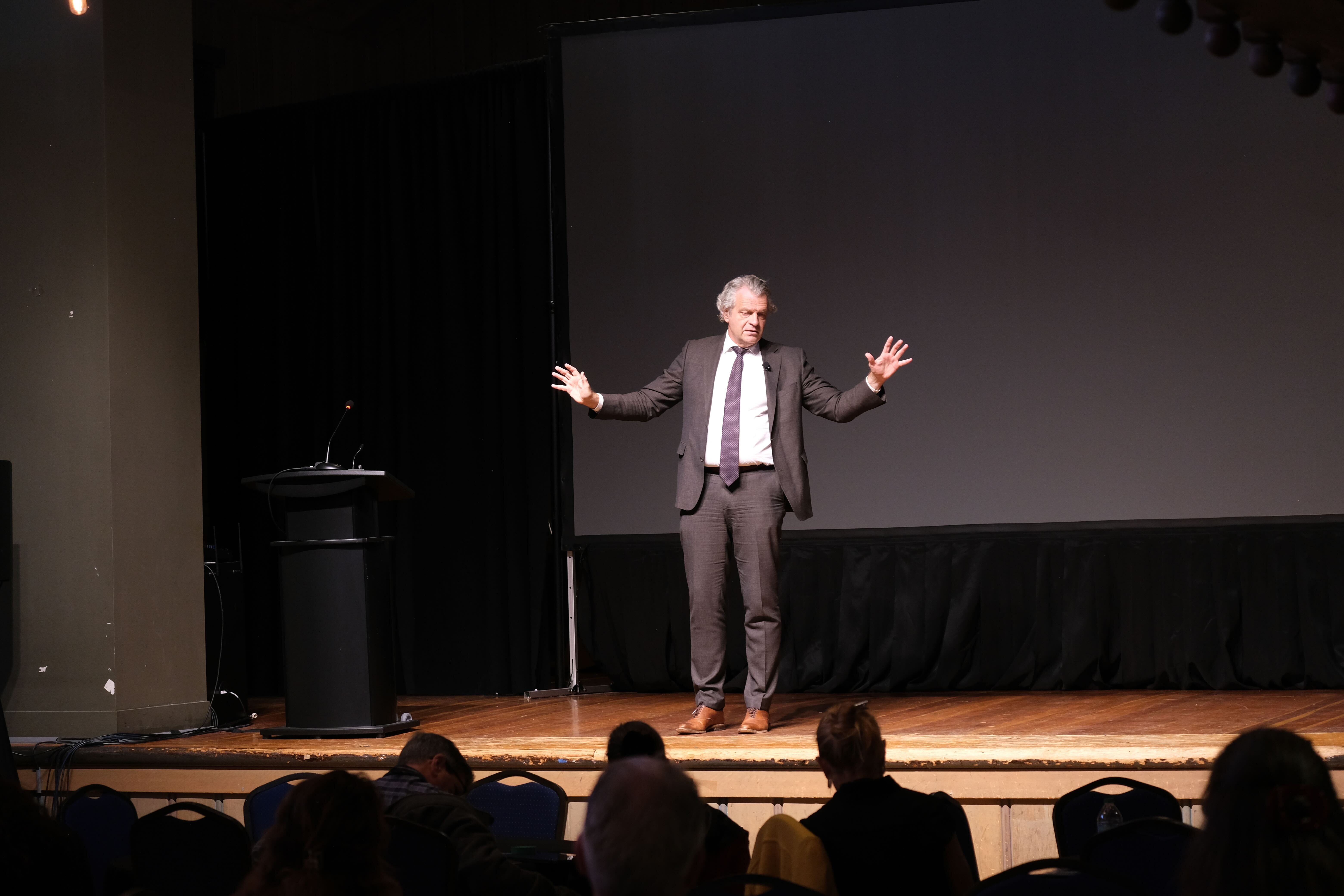
Vanderbilt University Chancellor Daniel Diermeier didn’t fly all the way to Berkeley, California, to deliver another talk about what’s gone wrong in the academy: he came with an urgent prescription that set the tone for a two-day Heterodox Academy regional conference where over 80 scholars from across the West Coast have gathered to discuss practical action on how to improve viewpoint diversity.
Diermeier has been one of the most outspoken voices in the national conversation about university reform. But to reform effectively, we must understand what has gone wrong. “The fundamental problem is the erosion of scholarly standards under a political agenda. That’s not the same as viewpoint diversity. We’re seeing now in a variety of fields that faculty are arguing and acting in a way that the fundamental scholarly standards that we have taken for granted have been subordinated to political goals.”
The consequences of this politicization are all too familiar for members of HxA: “There is a suppression of ideas, questions that cannot be asked, research not published, books not reviewed, papers rejected; prizes are given because work is aligned with a particular point of view.” For Diermeier, these are failures of the scholarly enterprise itself.
How did this happen? Diermeier pointed to three distinct factions of faculty on campus. The first and most consequential has been a vocal, organized minority who “look at their scholarship and education as a manifestation of a political agenda. They are organized, motivated, and politics are critical to their identity.” The second, the majority of faculty, “just want to be left alone and do their work.” The third — faculty who could push back — have until now been “unorganized and dispersed throughout campus.”
The consequence is that institutions have been drifting toward politicization and away from the core mission. “The purpose of the university is path-breaking research and transformative education. Full stop. That’s what we do. Once you believe that, lots of things follow. If we don’t agree on that, it’s difficult to have discussions about what should happen in the classroom.”
“Universities are drifting like a sailboat without a keel,” he said. University presidents and other campus leaders, faced with relentless political pressure, “muddle through because it’s painful to engage and push back.”
Diermeier urged the faculty in the room to get organized with others across campus to keep the pressure on for change, because without faculty support, campus leaders have little basis for making such principled changes happen. “The need for faculty like you to get involved, to get organized, to have clear principles, and advocate courageously is essential. Without that it won’t happen.”
Despite the dire diagnosis, Diermeier is hopeful the progress of the last couple of years means that “things are moving in the right direction.” He cited cultural changes like more diverse speakers being encouraged on campuses and increasing institutional neutrality adoptions, a policy he has advocated for many years.
“This is a generational opportunity,” he said. “We’re going into a new chapter that will require even more thought. But I’m optimistic.”
The conference continues today, with the work Diermeier called for already underway in the room.