


Welcome to The Weekly, a new column by HxA communications director Nicole Barbaro Simovski, Ph.D. who will run down the biggest stories we’re following this week, delivered (most) Saturday mornings to your inbox.
The new semester is underway and states aren’t pulling their foot off the gas as they exert authority over classroom content. Texas — a state that has regularly been in the news this year for academic freedom violations — continues to make headlines. Last week it was Plato; this week it’s a graduate ethics course that was literally cancelled.
The Texas A&M course on ethics and public policy was pulled three days after the semester began with the university alleging that professor Leonard Bright failed to provide enough instructional detail about how he was going to teach his course, which deals with race and gender, therefore not enabling administrators to determine if the course complied with new regulations for discussing those topics.
According to reporting by the Texas Tribune, up to 200 courses could be affected by the university system policy, with courses that venture into certain topics, notably race and gender, now requiring upper-administration approval. University officials argue that they are seeking alignment between specific courses, (often general) course descriptions, and system policy.
Texas A&M Bush School Dean John Sherman wrote to faculty that “I want us to continue to teach hard topics and to engage with controversial issues, but I also expect us to follow the process laid out for the approval of syllabi and to ensure alignment between our syllabi and our course descriptions. Put simply, transparency does not equal censorship.”
The “but” is doing a lot of work here. As I wrote in the fall during another course content controversy at Texas A&M when the professor was fired, whether from the right or the left, “the result is the same: a culture of fear on campus wherein education is reduced to ideological policing rather than free inquiry and learning.”
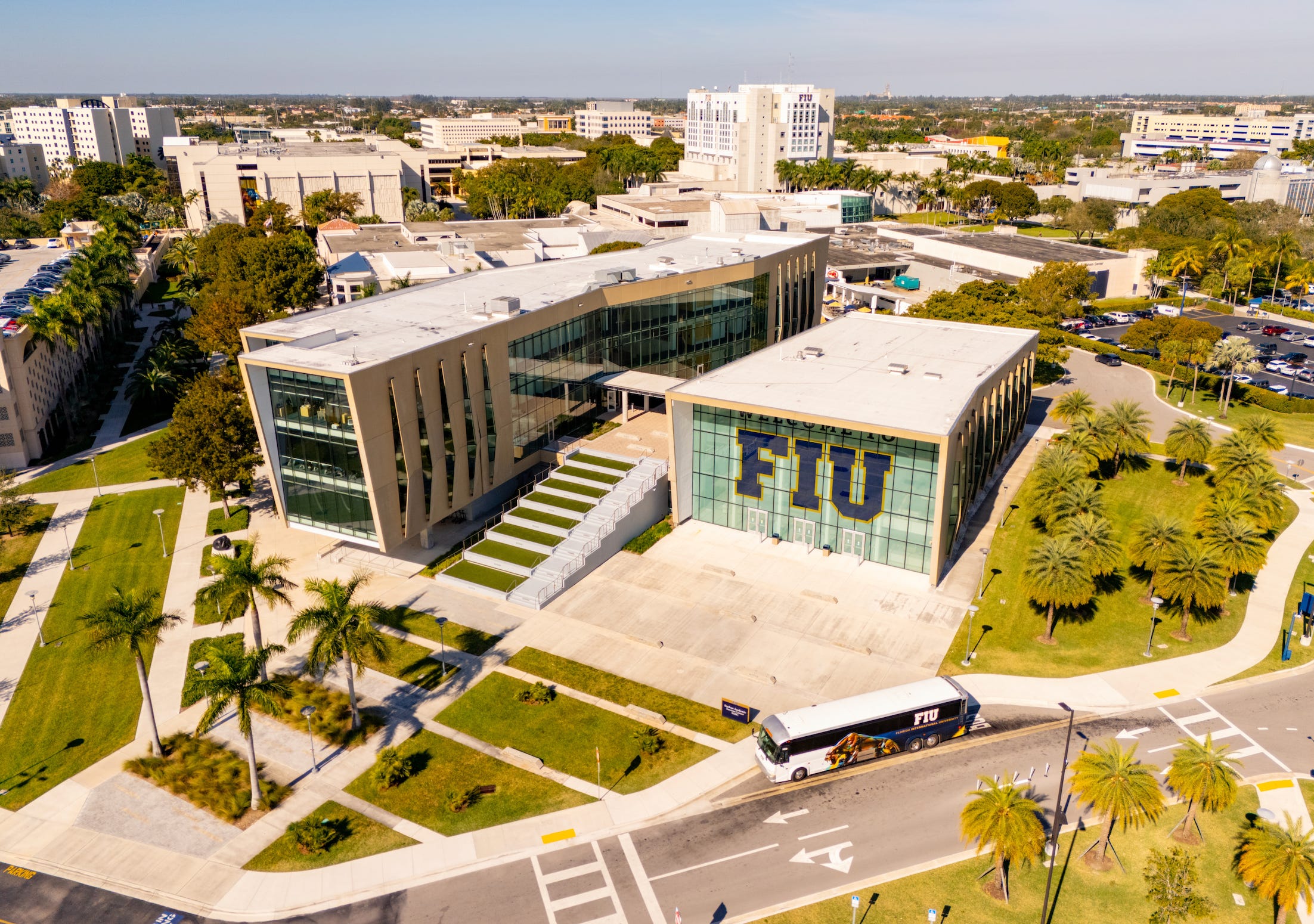
Over in Florida, the state is now censoring textbooks to remove wrong-think on race and gender across sociology. Florida International University is requiring a state-approved textbook for general education sociology courses. But the book is heavily redacted. According to reporting by Inside Higher Ed:
Compared to the original 669-page textbook, the new version is just 267 pages. Unlike the original, the state-approved version doesn’t include chapters on media and technology, global inequality, race and ethnicity, social stratification, or gender, sex and sexuality. It also scraps a section on the government-led genocide of Native Americans. And while the original uses the word “transgender” 68 times and “racism” 115 times, the former term appears only once in the new textbook and the latter six times.
Followers of HxA are familiar with the challenges the discipline of sociology is facing. HxA member Jukka Savolainen prominently argued that “given that the enterprise is dominated by a single political orientation, it is reasonable to ask whether that compromises the quality of the scholarship.” And it certainly is. It’s also certainly the case that redacting 60% of a disciplinary textbook is not the way to fix issues of viewpoint diversity. As Savolainen advocates, reforms in sociology must instead be “grounded not in partisan retaliation but in the principles of open science, intellectual pluralism, and Mertonian norms.”
This censorship in Texas and Florida follows on the heels of a banner year for censorship across the academy according to a new report from PEN America. 2025 saw five new state or university system policies of educational “gag orders” that led to the types of censorship described above. Although PEN America’s report has its own conceptual issues with regard to lumping institutional neutrality in as censorship — more on that Monday — the underlying trend is difficult to ignore: external control over content is picking up steam.
Some institutions are trying to clarify the boundaries of academic freedom to “get in front” of public pressure campaigns, like those that have happened in Texas. The University of North Carolina system is moving to formally articulate what academic freedom does and does not protect, with heavy input from faculty. The proposed policy:
states that academic freedom would protect professors’ ability to teach and research “controversial and unpopular ideas” within their disciplines and subjects; express “scholarly opinions” and present “diverse perspectives” in their fields; assess students based on “academic criteria”; and engage in shared governance on matters like curriculum.
But academic freedom, as outlined in the policy, would not protect faculty teaching content that is “clearly unrelated” to their course descriptions or the disciplines or subject matters of the class; using “university resources for political or ideological advocacy”; or refusing to comply with university policies and accreditation standards.
That effort points toward a larger leadership question now surfacing across the academy. As Dartmouth president Sian Beilock penned in The Wall Street Journal this week, universities need to “re-center higher education on learning rather than political posturing. Too often, colleges and universities have participated in the culture wars. The result is an environment in which students and faculty feel they must toe an ideological line rather than explore ideas that fall outside prevailing norms.” A sentiment the public overwhelmingly supports.
A solution advocated by Heterodox Academy has reemerged this semester after a surge of adoptions in 2024: institutional neutrality. The topic even made it to the stage at this year’s American Association of Colleges and Universities conference. As Higher Ed Dive reported, leaders increasingly describe their institutional mission as a “north star” for deciding when to speak out. But that framing raises a fundamental question about what the purpose of the university is.
As HxA president John Tomasi argued in The Chronicle of Higher Education this week, universities are not moral actors. “Faculty, students, and staff disagree — often deeply — about justice, equality, truth, harm, and social progress. Institutional neutrality recognizes this fact and refuses to resolve disagreements by administrative fiat,” he wrote. “When a college issues an official moral judgment on a contested issue, it inevitably does more than ‘add speech.’ It reassigns moral authority, signaling which views are legitimate and which are disfavored within the institution.”
The through line in all of this is that when universities that lack clarity about their purpose, they will continue to lurch between external pressure and internal panic — with public confidence in our universities as fundamentally important institutions in our society as the casualty.
I think this pursuit of open-mindedness can be assisted by an approach you might call definitional openness. Put simply, no university should tolerates courses or professors who practice ‘closed’ definitions of words or terms. No student should be penalized for articulating their understanding of what a term like ‘anti-racism’ means. Neither Kendi nor anyone else is allowed to own that term. Students who contest his definition should be rewarded, not punished. Inquiry is better than activism in the university. Stop activists from freezing the brains of students.
The real issue is do any of these courses have value to our society or those learning them ..maybe cancelation is better than censorship.