


Is viewpoint diversity the “mantra of the moment?” It sure seems that way. While Heterodox Academy (HxA) and its members have been grappling with viewpoint diversity in teaching and scholarship for over a decade, university leadership is now taking the problem seriously enough to attempt real, internal changes.
As Vanderbilt Chancellor Daniel Diermeier emphasized in his keynote address at HxA’s West Coast Conference on Thursday, viewpoint homogeneity can manifest as eroded academic standards and politicized campuses, with an intellectual culture that narrows questions, prescribes answers, and causes mission drift.
In what we are seeing as the start of a tidal shift within the academy, two of the most prestigious universities in the U.S. recently released internal independent reports on the challenges facing open inquiry and viewpoint diversity in higher ed. Last week it was Yale, this week Harvard Medical School. Both detail specific internal recommendations for reform to restore trust and address the corrosive damage of the last 15 years or so.
The Yale report calls for actions such as self-study on “the diversity of perspectives in its curriculum,” while Harvard recommends pedagogical approaches to demonstrate viewpoint diversity in the classroom, recognizing that “activism should not compromise… the diversity of opinions within medicine.”
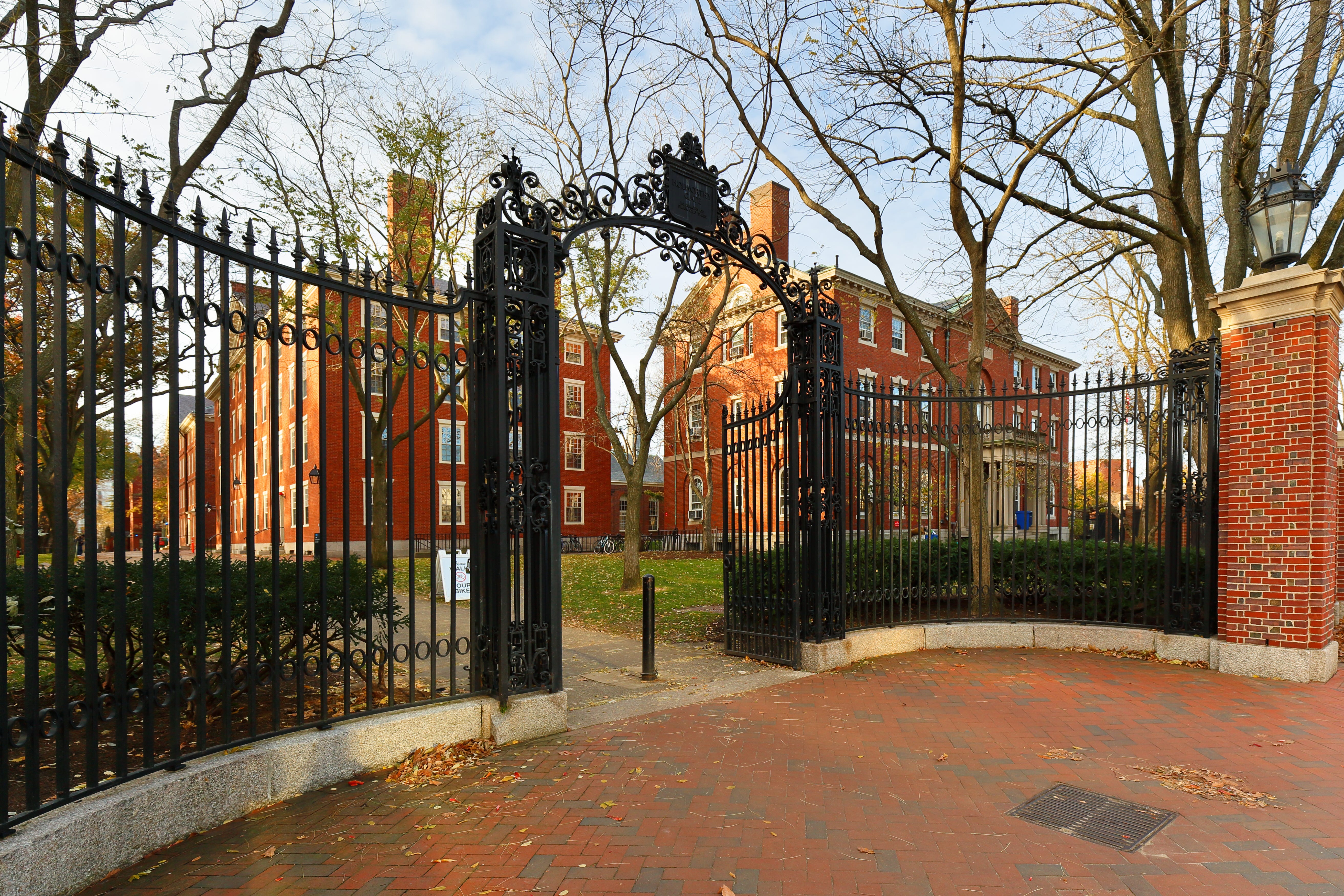
On the main Harvard campus, The Harvard Crimson reported that top administrators are “quietly” asking donors for funds to hire a new cohort of professors aimed at broadening the ideological composition of faculty. This quickly prompted a range of op-eds on the bigger policy issue of how to improve viewpoint diversity in the academy.
David Randall argues in Minding the Campus that appointments won’t fix the deeper problem: “If Harvard doesn’t change its regular hiring processes, it isn’t serious about ‘viewpoint diversity.’ And all these endowed professorships will be a new Harvard marketing scheme for gullible donors.”
James Freeman is wary of an ideological focus and hopes to move straight to rigor, arguing in The Wall Street Journal that Harvard should instead “hire new faculty who are so curious and whose scholarship is so serious and unpredictable that no one can ascertain their political beliefs.”
Kirsten A. Weld, who leads Harvard’s AAUP faculty chapter, dismissed concerns about a “purported liberal bias” and argues that the push is “part of a broader effort to diminish the authority and autonomy of the faculty.”
The Crimson editorial board recommends, as a more effective solution, building a “new institute for pluralism,” similar to the prestigious Hoover Institution at Stanford, that “could serve as a home for rigorous conservative thought, exposing students and faculty across disciplines to heterodoxical perspectives.” But this, too, risks siloing non-left scholarship and normalizing the clear ideological skew of the campus.
As I wrote last week, it’s good news that there are robust internal reforms happening, giving foundational principles of open inquiry and viewpoint diversity legs on campus. This is in no small part due to the leadership of many vocal university presidents, who, according to HxA member Gregory Conti and his co-author Aaron Sibarium, “have essentially acknowledged what polling shows: that politicization and ideological bias harmed higher education’s standing with the American public, and that a new direction is needed.”
All is not rose-tinted, however. There remain broader cultural and normative issues that go beyond faculty viewpoint diversity. At UCLA Law School, student protesters both demonstrated at and disrupted a conservative student group event featuring the General Counsel of the Department of Homeland Security. This comes on the heels of Tennessee passing the “Charlie Kirk Act” that forbids disinvitations of speakers based on their viewpoints and makes it illegal to shout down campus speakers.
Michael Hurley took to FIRE’s blog to offer its legal perspective on this legislation, arguing that “the Charlie Kirk Act will allow members of the campus community to speak with renewed confidence. Professors can contest university positions with more protection against retaliation. Students and faculty can invite speakers without worrying that the school will shut them down because others protest. … Bottom line: that’s a significant win for free expression at Tennessee’s public universities.”
The Tennessee bill brings up a variety of questions about free speech, expression, and the general intrusion of governments into campus speech. Writing for The Chronicle of Higher Education before the bill passed, HxA member Randall Kennedy argued that disinvitation — and the debates it sparks — can serve a useful purpose:
Parties urging disinvitation are simply responding to speech (the invitation) with more speech (the demand for withdrawal). That demand alone ought not be seen as violating the rules or spirit of academic toleration. Members of a college community should have a say in shaping the character of their institution. Those demanding disinvitation are simply having their say.
Over in Utah, the University of Utah is causing controversy for an overapplication of institutional neutrality. As the Salt Lake Tribune reports, a student-organized Earth Day event was required to change their advertising language on flyers posted around campus because the student group was officially sanctioned by the university and thus was required to adhere to institutional neutrality. University officials say the event participants can still “speak freely,” but the language on the flyer has to be “politically neutral.” To quote a colleague at HxA: “That’s not how this works.”
But, in a world of federal and state sticks, we’re seeing cases like this more. The principles need to be right — absolutely — but we also need good policy implementation so we don’t end up with censorship and a different kind of homogenization on campus.
But countering the monoculture that has developed on campus over decades also requires a long view of change, as Bret Stephens argues in The New York Times:
Part of the problem is that a university that spent decades turning itself into what it is now cannot easily turn itself into something else — not least because the self-governing (and often self-dealing) structures of academic life make it difficult to foster the deep cultural changes that universities require. University leaders who try to address the problem of ideological homogenization, for instance, are rarely able to do more than establish an on-campus institute or a faculty position for a tokenized conservative view. But those efforts mainly replicate one of modern academia’s worst mistakes, which was to embrace the cause of diversity (of race, ethnicity and now viewpoint) as a substitute for truth-seeking.
What universities need aren’t more young Republicans or islands of conservative thought. What they need, in every department, are more skeptics and iconoclasts and people with a capacity to change their minds intelligently. Selecting for those virtues, particularly in faculty hiring, is a long-term task.
There is no silver bullet solution; we’re playing the long game here. But the long game requires us to get started — now. Join HxA and shape what happens next.
Mantra of the moment? Why smear an attempt to remedy the toxic effects caused by the woke left (DEI, censorings and cancellations, ...)?
This piece is incoherent.
In which I call for more inclusion of "none of your business" into the viewpoint diversity mix.. https://hollisrobbinsanecdotal.substack.com/p/what-ai-changes-about-viewpoint-diversity