


Yesterday, Erin Shaw wrote in these pages about how presidents must take open inquiry and the intellectual climate on campus seriously if they are to restore public trust in our universities. Although it seems that not yet enough of them are doing so according to Inside Higher Ed’s latest survey of presidents, many are finally being public about supporting the values for which Heterodox Academy has long advocated.
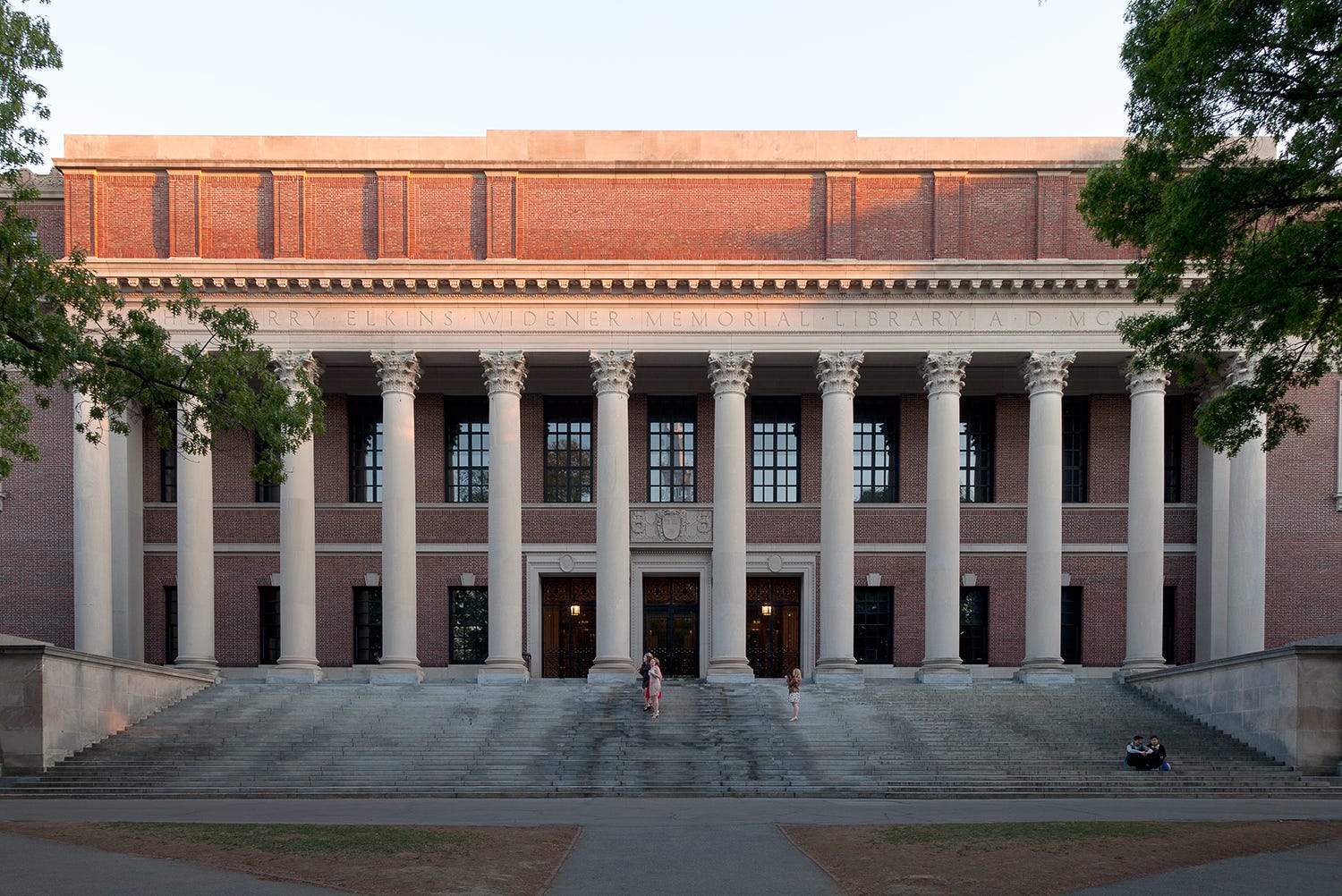
During an address earlier this week, Senior Fellow and Chair of the Harvard Corporation (the governing board of Harvard University) Penny S. Pritzker said the university is “recommitting to free inquiry and civil discourse.” As the Harvard Crimson reports, Pritzker praised the leadership of president Alan M. Garber, who has set civil discourse as the university’s “north star” and enacted new campus policies, including one of institutional statement neutrality back in 2024. Newly appointed Harvard Corporation member Michael S. Chae also noted the “importance of fostering and protecting a culture of academic freedom and intellectual diversity” at Harvard in his remarks this week.
Harvard has long been one of HxA’s top universities by membership, with 85 members on their faculty and staff, including founding member Steven Pinker and HxA board member Jeffrey Flier. The values of open inquiry, free expression, viewpoint diversity, and constructive disagreement are finally being put into practice on campuses across the country as our more than 8,400 members are increasingly involved in decision making.
The president of Pepperdine University, Jim Gash, also spoke out in an op-ed recently, arguing that the “fractured campus culture we see all around us” is the result of having replaced “the fearless pursuit of truth with the comfort of echo chambers” where we’ve “inadvertently cultivated a climate where the presence of a dissenting opinion is viewed as a threat rather than an opportunity for growth.” Gash continues by advocating for HxA’s solutions:
Colleges should form academic communities that promote viewpoint diversity, safeguard academic freedom and nourish intellectual curiosity. Students and faculty must be encouraged to question assumptions and engage in constructive dialogue about competing viewpoints.
Scholarly research is strengthened by multiple perspectives, without undue influence or censorship in service of the then-prevailing viewpoint. Truth is best found in robust conversation with others, with the wisest voices of both past and present.
Other presidents, like Sian Beilock of Dartmouth, have been vocal in the need for internal-driven reform at our universities. Beilock has led campus cultural change, explaining to John Tomasi on the HxA podcast this week how her institution is seeing an uptick in applications due to their strengthening reputation for having an intellectually challenging campus environment.
I think young people want this. Our applications have gone up as our Ivy peers’ have not. Our yield has gone up and 74% of students we accepted came to Dartmouth as their first choice. And 66% of our incoming students said they chose Dartmouth over another institution because of the Dartmouth Dialogues program. They are hungry for having different viewpoints and hearing from different people. Students are constantly telling me, even our most liberal students, that their best experiences are often when they hear conservative speakers on campus.
From this presidential rhetoric is coming policy on paper. Penn’s Committee on Open Expression unveiled a draft of their new expression policies, last updated in 1993. Unlike the previous version, the draft policy now lists “speech or conduct that is threatening, harassing, severe, or pervasive such that it limits or denies a Penn community member’s ability to participate in or benefit from their education or work” as a violation, where previously the Committee declined to regulate such speech content. The draft states:
Such speech or conduct will be considered more severe if it targets individuals or groups on the basis of a characteristic or class protected by the University’s Equal Opportunity Policy and Nondiscrimination Statement, or federal, state, or local law, or other related Penn policies.
The policy draft also encourages the potential value of controversial speakers to campus, noting that such events affirm “the value of creating a robust marketplace of ideas and fostering reasoned debate, disagreement, and discourse.”
What’s notable about these stories is that many top institutional leaders are now taking the work of internal reform on open inquiry and viewpoint diversity seriously, as thousands of HxA members have been calling for since 2015. But this internal reform is now happening amidst unprecedented legislative action, calling into question the extent to which institutional policy is a response to external pressure.
Aside from the continuous lawsuits coming from the White House, universities across the nation, especially in red states, are being subject to increasing state-level legislation. The Chronicle of Higher Education tracks policy updates on their website during the busy legislative session, but here are a couple of highlights from this past week.
Out West, the University of Wyoming, the state’s only public university, recently dodged a $40 million budget cut. The crux of the tension between the state and the university is what the mission of the university is as a land-grant institution and whether the university is providing “practical” education to citizens. President Ed Seidel told The Chronicle, “This year we had our work cut out for us to make clear what the value of the university was,” noting that he thinks “public scrutiny is going to continue.”
The University of Wyoming has been a nation-wide leader in internal-led reform, adopting a set of policies designed to reinforce intellectual, academic, and expressive freedoms; institutional neutrality; civil discourse; and merit-based hiring. This work has been led by HxA members, including Martha McCaughey, who works with president Ed Seidel to build a culture of open inquiry at Wyoming.
In Kentucky, legislation that appears likely to pass will make it easier for tenured faculty to be fired for “low enrollment in a major or, more broadly, ‘misalignment of revenue and costs,’” according to reporting from Inside Higher Ed.
Detractors, including American Association of University Professors president Todd Wolfson and American Federation of Teachers president Randi Weingarten, warned the bill “could be invoked to shut down research programs whose findings go against the financial interests of board members, to eliminate academic departments that have become easy ideological targets nationwide, and to silence faculty members whose speech board members dislike.”
While many see state legislation as an overall threat to self-governance and institutional autonomy, others see the state as a key player in reform. Writing for the James G. Martin Center for Academic Renewal, Jenna Robinson notes that “state policies and practices affect every interaction between students and their universities,” and advocates for increasing state involvement that she sees as “essential” for reform.
There’s no question that this era of higher ed is going to be marked by a continuous tension between lawmakers and academic insiders. Presidents now say they want open inquiry. New policies and programs show significant movement forward. Legislation may accelerate, complicate, or undermine those efforts — depending on who you ask and what specific policy is in question. That line between accountability and interference is what’s being contested right now.
I would like to see a clearly stated code of conduct where anyone preventing other students from hearing a speaker be subject to suspension. It makes sense to have state legislation that makes this a provision for funding. Those engaging in brown shirt disruption have no place in a learning environment.