


Call it “Judgment Week.” This week, an extensive report from Cornell calls for universities to cultivate judgment; Vanderbilt report asks if anthropologists can be more than moral “witnesses”; and the ACLU indicts higher ed and the feds for censoring pro-Palestinian viewpoints.
Check out the top stories we’re following this week at HxA.
Think a Little Longer with Big Red
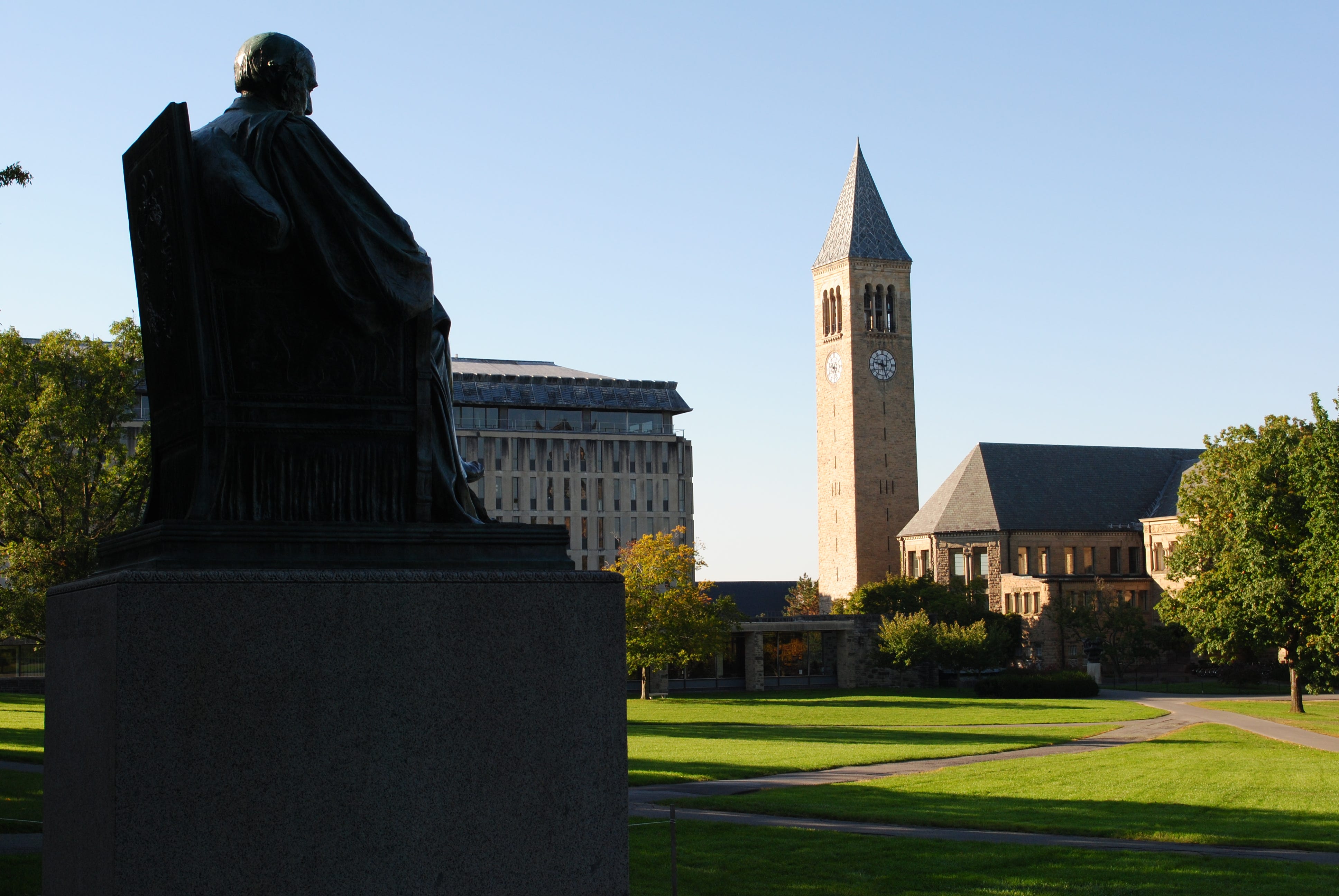
Cornell University released its faculty committee’s long-awaited Report on the Future of the American University. On the heels of similarly self-reflective reports at Yale and Harvard Medical School, it is encouraging to see Cornell’s committee call for differing opinions to be “not only tolerated but embraced” on campus, while endorsing the scholarly practice of adversarial collaboration.
But as its expansive name suggests, the Cornell Report zooms out far beyond ideological disagreement. Given all the pressures pulling apart the modern university, or “multiversity,” what should hold it together? The committee has an answer. Other institutions work with knowledge in many ways, including research, teaching, and application. But “[o]nly the American university links them together into a single learning ecosystem unified by a critical practice — deliberation — toward the goal of cultivating a vital capacity: sound judgment.”
The Report goes on:
Judgment is the skill that learning produces. It is the slow, consequential, evidence-based discernment that resists the hot take and the hasty verdict. It is the common catalyst of research, teaching, and engagement alike, and it is the university’s most important contribution to a modern democracy.
Over its 238 pages, the Cornell Report considers a wide range of steps toward this vision, including more “two-way engagement” with the public and revisiting admissions incentives that leave students “ill-equipped for the open inquiry and intellectual risk-taking” of college.
Takes on the Report are already rolling in. Some observers see political positioning and a bid to avoid future federal action. The Wall Street Journal faults the Report for not taking more blame for the loss of public trust. Benjamin Storey and Jenna Silber Storey see hope for human-centered judgment and a more astute kind of “academic civics.”
But what will the Cornell vision look like, in practice, at Cornell? Will we see a new coherence in the teaching, research, and deliberation there, or will “judgment” become an empty buzzword? We might have to wait and see. No hasty verdicts, please; this is a university.
Anthropology on Trial (or is that Divorce Court?)
In the latest supporting chapter to the Vanderbilt-WashU report on the State of Scholarship, Harvard anthropologist Joseph Henrich takes stock of his discipline by tracing anthropology’s “epistemological ruptures” that have called into question the most basic foundations of the scientific-humanistic field. After a touching tribute to the value of his discipline, Henrich articulates his own view of how anthropologists should try to improve the world:
While our goals are ultimately applied — improving the world — we should work as a scholarly community to keep our moral preferences and political goals as separate as possible from the machinery of knowledge generation. This is a challenge, but field-level scholarly standards (e.g., in peer review), rigorous methods and formal theory (e.g., mathematical models) offer important guardrails that shield the knowledge-generating process and thus improve our scholarship.
This view is not shared across the discipline. As Henrich argues through an eight-part review of evidence, an ascendant “new epistemology” now judges anthropological claims based on considerations of power (who is powerful or oppressed?), positionality (is the researcher proximate to the oppressed group?), and ethics (who is helped or hurt by the research?).
Three decades after Nancy Scheper-Hughes argued for a shift from scientific “observation” to moral “witnessing,” Henrich makes the case that anthropology has blurred the lines between inquiry and activism — and this shift is far more pronounced in the subfield of cultural anthropology. The split in anthropology as a field sometimes runs through individual departments that actually divide in two, but by the end of Henrich’s analysis one wonders: maybe that’s for the best?
Complex Issue, Simple Censorship
Finally, this week the ACLU and Amnesty International USA issued a report entitled Student Speech Under Attack: Suppression of Pro-Palestine Speech and Dissent on Campus. The two advocacy groups draw on data from a range of sources, including FIRE’s case work, to argue for a pattern of viewpoint-based suppression by universities and the American government.
While much of the report concerns encampments and law enforcement at the complex intersection of speech and conduct, there are also troubling and verified examples of clear-cut censorship — a student detained over an op-ed, a Texas State professor fired over political opinions, and a student expelled over views posted online, among others. The free exchange of ideas, even and especially unpopular ideas, is an essential ingredient for open inquiry on campus. As we regrettably see every year, it must be defended against both Left and Right.
Have campus news related to open inquiry that we should be aware of? Send it to communications@heterodoxacademy.org