

By Jeffrey S. Flier
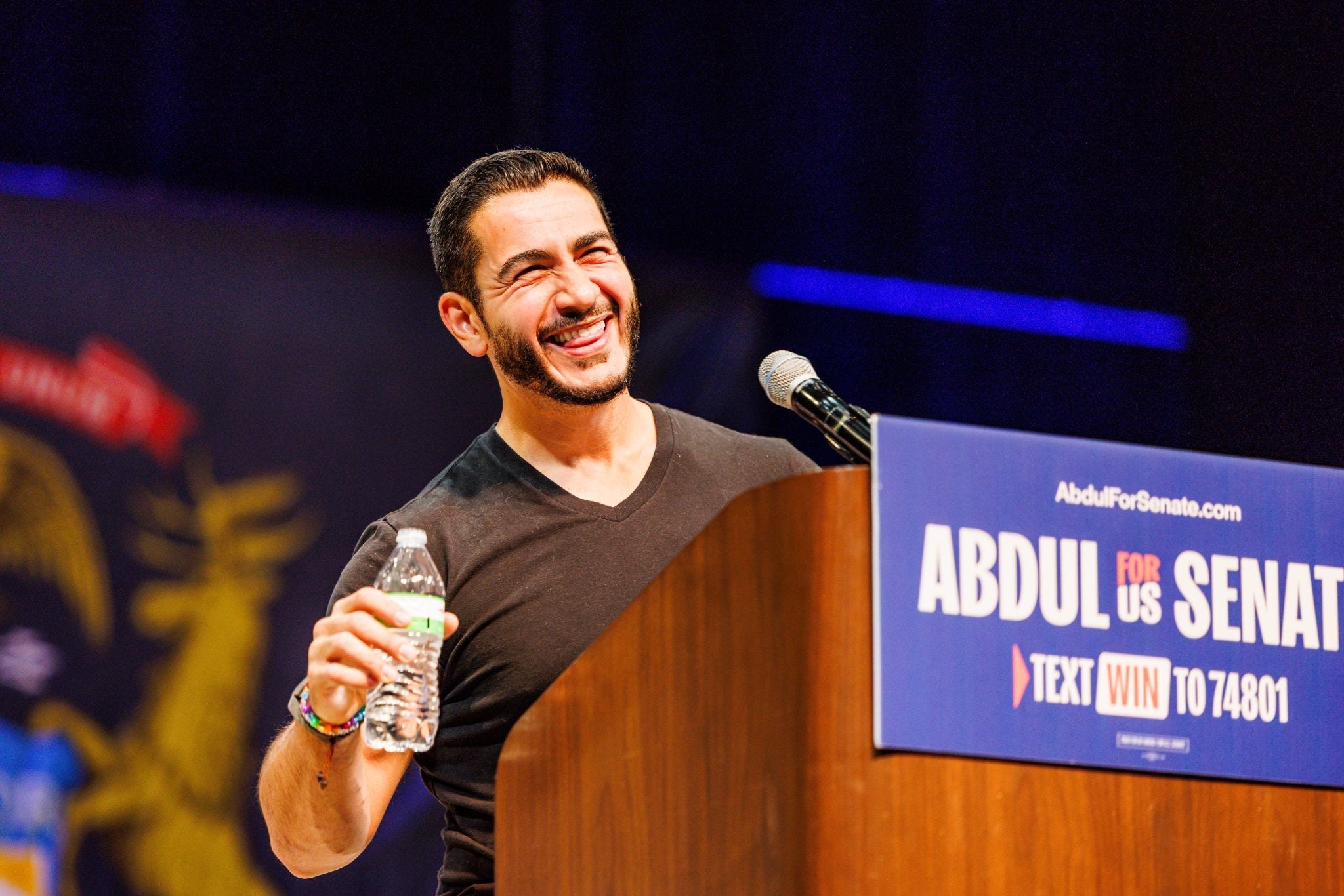
On July 30, 2026, the American Association of University Professors did something it had never done in its 110-year history: endorse a candidate for federal elected office. AAUP President Todd Wolfson announced his organization would back Abdul El-Sayed, a Democratic candidate in Michigan’s U.S. Senate primary. And Wolfson made it clear that further endorsements will be coming, describing a shift from a defensive posture to an “offense” built on organizing and political advocacy.
The impulse behind this is understandable. Higher education is now under enormous threat — from political interference in curricula and hiring, lawsuits and executive actions targeting universities, and illegal threats to funding. The AAUP has filed litigation to defend faculty and institutions from some of these assaults, which is entirely appropriate. But their decision to engage in partisan electoral endorsements is a profound institutional mistake that will cost AAUP whatever credibility it retains as a principled defender of academic freedom.
Since its founding in 1915, AAUP’s core mission has been to protect the ability of faculty to teach, research, and speak without fear of institutional or political retaliation. That mission requires AAUP to defend academic freedom independent of a professor’s political leanings. A Marxist historian facing an antagonistic state legislature and an evolutionary biologist being attacked for taking a controversial stand on sex and gender both need AAUP’s protection. The organization’s legitimacy to intervene in these and other cases rests on it not being seen as one political faction committed to defending its own.
Endorsing a Democratic Senate primary candidate — whatever the merits of the candidate’s positions on higher education — severely undermines that claim. A professor who doesn’t share AAUP’s partisan choice will conclude that the organization does not represent them. This isn’t hypothetical reputational damage. It is a direct blow to AAUP’s ability to effectively pursue academic freedom advocacy in all of its forms. Many in the community will have a valid reason to view AAUP as an ideologically biased professional association and a partisan political advocacy group.
How and when did this transition occur? For most of its history, AAUP was a professional association defined by standards it articulated and defended. Its1940 Statement of Principles on Academic Freedom and Tenure is cited in faculty handbooks nationwide. It censured institutions that violated academic freedom and acted as a voice for the profession as a whole.
In the early 1970’s AAUP endorsed a strategy of becoming a union/bargaining unit for subsets of faculty at selected universities. In 2022, AAUP formally affiliated with the American Federation of Teachers, bringing AAUP into the AFT’s 1.7-million-member structure and, through it, into the AFL-CIO. As a consequence, AAUP would function as an autonomous AFT affiliate. AAUP leadership sold this major development as a practical move — AAUP had domain expertise in higher education, AFT had resources and state-federation clout. After a century defining itself as the profession’s standard-setter, AAUP formally joined the labor movement. The AFL-CIO is not a neutral body; it is one of the most consistent institutional backers of Democratic candidates. With AAUP an AFL-CIO affiliate, endorsing a Democratic Senate primary candidate was less a deviation from precedent than its arrival at a destination to which its organizational logic was already pointing.
Another sign of evolving values and approach occurred in 2024, when the AAUP changed its longstanding policy against academic boycotts as a practice inimical to the free exchange of ideas, to one where boycotts “can be considered legitimate tactical responses”. Despite occurring at a time when boycotts of Israeli institutions were in the air, they made no reference to that as a reason for the changed policy, a disingenuous decision likely reflecting their engagement with activism not yet being ready for prime time. (In response, HxA released a statement criticizing the AAUP’s reversal, and affirming HxA’s stand against academic boycotts of all kinds.) Taken together, these decisions by the AAUP undermined their ability to claim faculty loyalty and public trust.
As AAUP now moves into partisan political advocacy, it’s important to ask how many faculty members it can claim to “represent”. Of the roughly 1.5 million faculty members at degree-granting postsecondary institutions in the United States, AAUP’s membership, counting both its advocacy chapters and its collective-bargaining locals, runs somewhere between 44,000 and 50,000. This includes tenure track, contingent faculty, and graduate student members. All told, that is around three percent of the American professoriate.
Voluntary associations don’t need majority support to be legitimate. But AAUP’s leadership sold its new endorsement policy by claiming that it’s simply democracy in action, since any member unhappy with the direction can run for office and change it. That framing treats AAUP’s internal governance as the relevant democratic criteria. But when AAUP speaks publicly — issuing a “first-ever national political endorsement” and positioning itself as the defender of higher education against political attack — it implies that it represents the profession, not three percent of it, assuming all of its members agree. To see it as representing university professors steals credibility from representation AAUP doesn’t have. In the future, reporters, legislators, and the public generally will perceive “the AAUP” as “a labor-affiliated advocacy group representing a small slice of unionized and voluntary-member faculty”, and will be correct in doing so.
Some defend the move by arguing that “neutrality” between defenders and attackers of academic freedom is a flawed and even harmful posture. When one political party is actively hostile to the sector, as is now the case, silence is abdication, not neutrality. Of course, an organization like AAUP should take positions on policies bearing directly on academic freedom — funding cuts, gag orders, loyalty oaths, curricular mandates. But endorsing particular candidates is a step too far.
AAUP observed this distinction for most of its history, including decades after engaging in collective bargaining at some schools. Taking clear positions for or against specific policies is different in kind from endorsing political candidates. A policy position can be defended on academic-freedom merits alone. In contrast, candidate endorsements ask members to accept candidates holding a slate of positions most of which have nothing to do with the university. Even candidates genuinely strong on higher-education issues will have unrelated commitments that many AAUP members will disagree about, since the membership is not uniformly of one political persuasion.
None of this means AAUP should go silent. Filing lawsuits against unconstitutional actions, issuing statements on actions threatening free inquiry, organizing faculty to resist incursions on academic freedom — these are all squarely within AAUP’s traditional mandate and are more urgent than ever given the assaults on the sector.
But there is a fundamental difference between a politically active labor union and a professional association whose authority reflects support for broadly accepted principles. By endorsing political candidates, AAUP has surrendered its identification as the professors’ organization; neither its explicit political identification nor its three-percent membership entitles it to that claim.
The AAUP is trading its hard-won credibility as a supporter of academic freedom for a louder but far shallower kind of political relevance — as one more union-backed political advocacy group in a crowded, polarized field. That transformation is a genuine loss, not just for AAUP’s tarnished brand, but for the community of educators, scholars and researchers whose core values it previously existed to protect.
A great university system needs organizations that professors across the political spectrum can turn to and trust as uncompromising advocates for academic freedom and the most fundamental values of the academy. With AAUP now having abandoned that role, we are fortunate to have membership groups including Heterodox Academy to carry the torch for open inquiry and academic freedom.
Editor’s note: Jeff Flier is speaking in his individual capacity as HxA Board Chair and Harvard Professor; this is not an official statement of the HxA Board.
Yeah, this doesn’t bode well, but then, there were already longstanding critical control points that failed before we arrived here. This is only a progression of the process and bearing academia has been on, not a deviation from it. Thank you for the article.
Individuals and organizations that feel threatened defend themselves. University professors have been politically attacked, including professors that had in the past supported the politicians doing the attacking.
The audience to whom AAUP endorsements are aimed are professors and those who care about them. Telling that audience that there are candidates who don't attack professors, or actually are professors, and suggesting those are good choices to vote for seems a natural path for any attacked organization except those barred from it (such as a 501c3 "registered charity").