


In lieu of The Weekly, I’m recapping the HxA West Coast Conference that took place at UC Berkeley last week.
The 80+ scholars who gathered at UC Berkeley for HxA’s West Coast Regional Conference didn’t come to vent or to mourn a lost university. They came to get organized and lead their campuses in reform. Vanderbilt University Chancellor Daniel Diermeier set the tone from the first minutes of his keynote about what must be done for change in the academy to occur.
“There used to be times when it took just a letter to get a speaker disinvited,” he said. “This is not the case right now.” Institutional neutrality is gaining ground. Diverse speakers are being welcomed on campuses where they once weren’t. On these things, “we look back and things are moving in the right direction.” But Diermeier was clear that acknowledging progress is not the same as declaring victory. Much work remains.
That harder problem, he argued, is deeper than just politics. “The fundamental problem is the erosion of scholarly standards under a political agenda. We’re seeing now in a variety of fields that faculty are arguing and acting in a way that the fundamental scholarly standards that we have taken for granted have been subordinated to political goals.” This point — the dangers to scholarship — threaded through nearly every conversation over the two days.
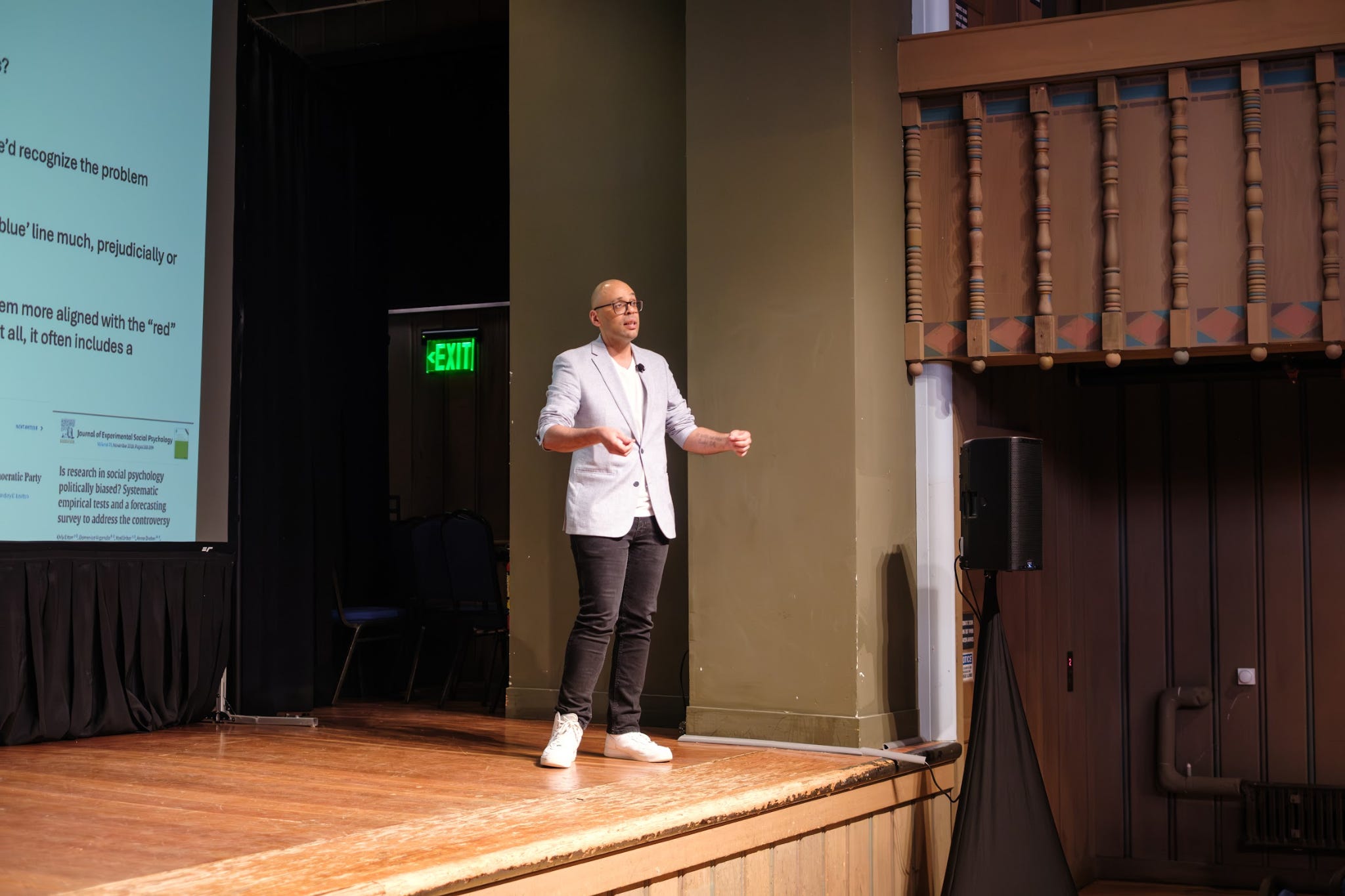
Musa al-Gharbi of Stony Brook University presented his Friday keynote address by tracing how political framing can corrupt the full lifecycle of research, from prejudicial study design, politically influenced framing of questions, distortion of analysis. He argued that our knowledge systems will only work as intended when institutions have broad swaths of people with diverse experiences, viewpoints, methods, and theories are able to take part in the academic enterprise. “This is a collective action issue,” he argued.
Claremont McKenna political scientist Jon Shields brought the problem into the classroom by sharing details of his recent publication using Open Syllabus data to show a structural asymmetry in what gets taught on contentious issues: left-leaning perspectives are rarely paired with counterarguments, while other viewpoints are almost always provided a progressive counter. The consequence, Shields argues, is not “indoctrination” so much as the “quiet alienation” of perspectives, students, and ultimately of the public trust universities depend on.
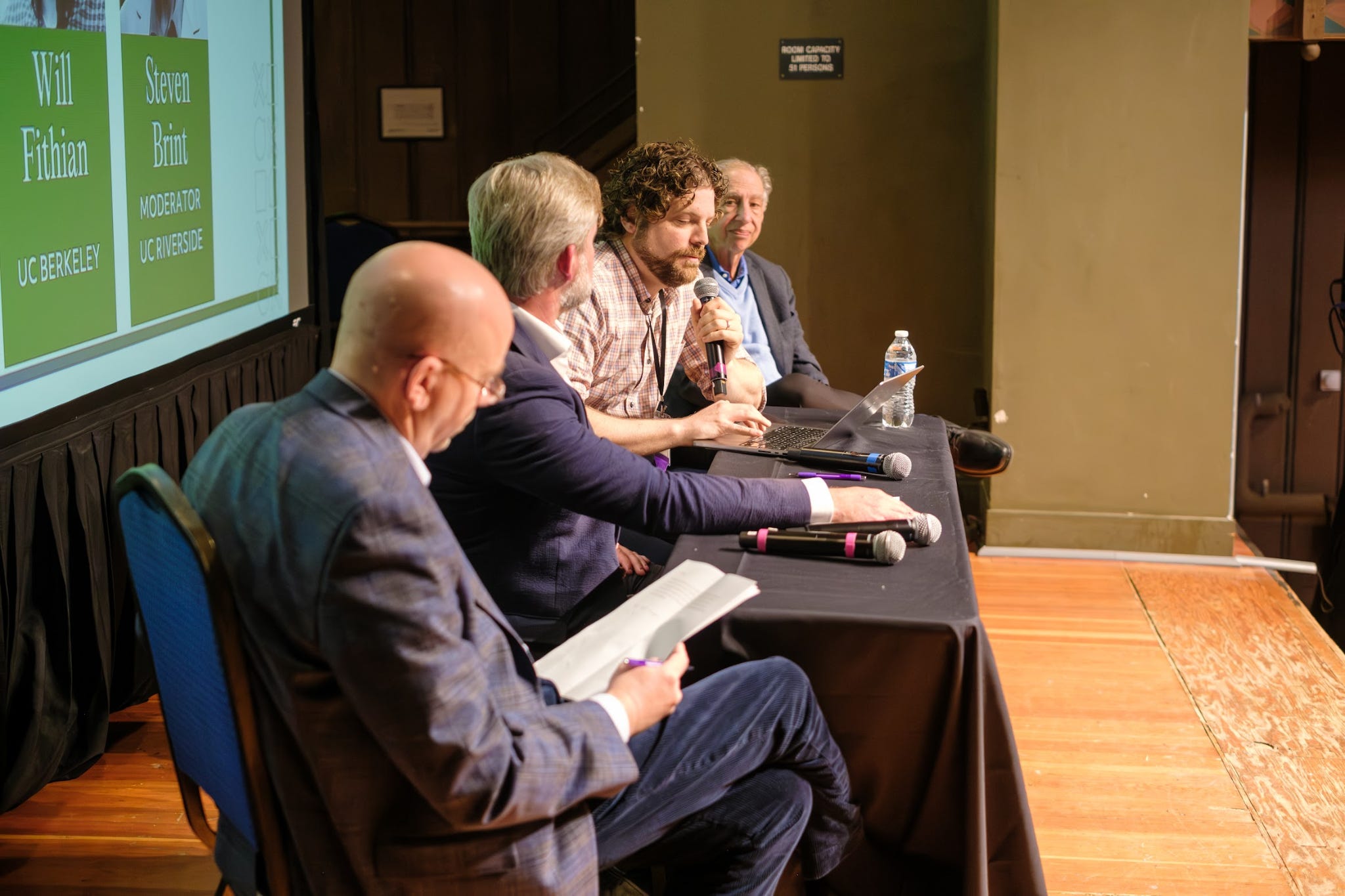
In a panel discussion about whether the Left or Right is a bigger threat to academic freedom, UC Berkeley historian Daniel Sargent lamented a 20-year trend in the presence of politics at all; in a department that once “functioned as an epistemic community,” today “ostentatious political posturing has become ubiquitous.”
But the political threat from outside the university is real and immediate. Political scientist Sean Gailmard, also of UC Berkeley, sounded an alarm about external interventions: when governments dictate curricula or close departments, “the foundation of the university as a space for free inquiry is compromised.” However, he was equally clear that the two threats are not independent: “They exist in a feedback loop that threatens the university’s position in the public.” Steven Brint, a distinguished professor of sociology and public policy at UC Riverside, put it plainly: the Right has read the internal corrosion and responded to it. Orienting toward principles rather than politics is the only way to break that cycle, the panelists agreed.
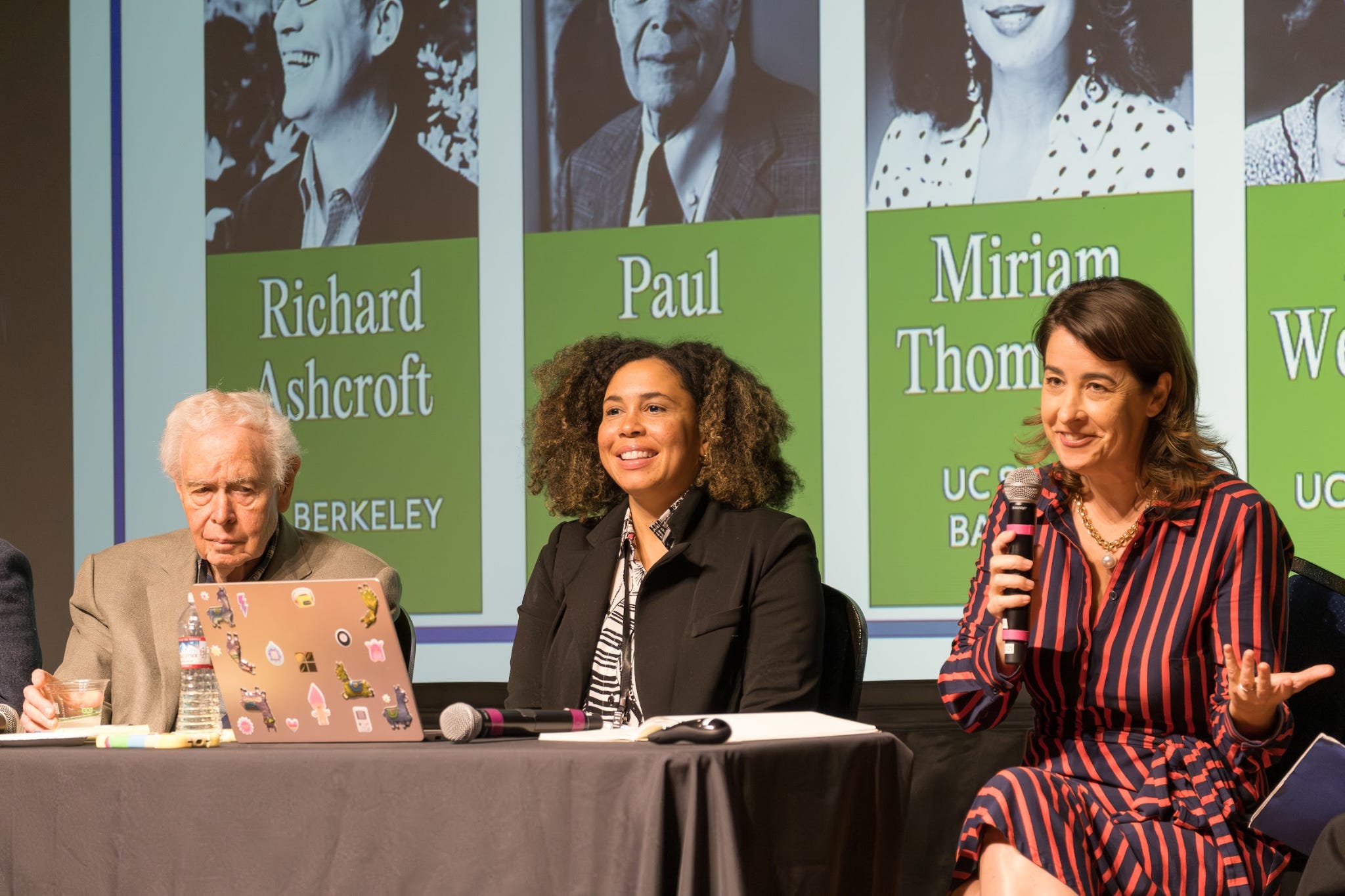
What does orienting toward principles look like in practice? In the classroom, panelist Brian Soucek of UC Davis Law pushed past the “teach both sides” frame: “More than just giving materials on both sides — we need to model that mature independence of mind, what it would mean to be open-minded, and model the virtues at the core of academic freedom.” He asked every professor in the room: ‘What have you done to instill mature independence of mind in your students?’”
Stanford French Professor Dan Edelstein described one institution’s response: a return to shared core texts, and a skills-based common intellectual experience for all students. Director of the Center for American Civics at ASU Paul Carrese framed civics and liberal arts reform as “enlightened self-interest” for the university, with bipartisan appeal.
Miriam Thomspon, counseling professor at UC Santa Barbara, explored the idea of a course mission statements that embed open inquiry in the classroom from day one; Erika Weissinger, a postdoctoral fellow at UC Berkeley’s School of Social Welfare, advocated starting with dyadic discussion in the classroom first before scaling up to larger class discussion to help students get lower-stakes practice in constructive disagreement.
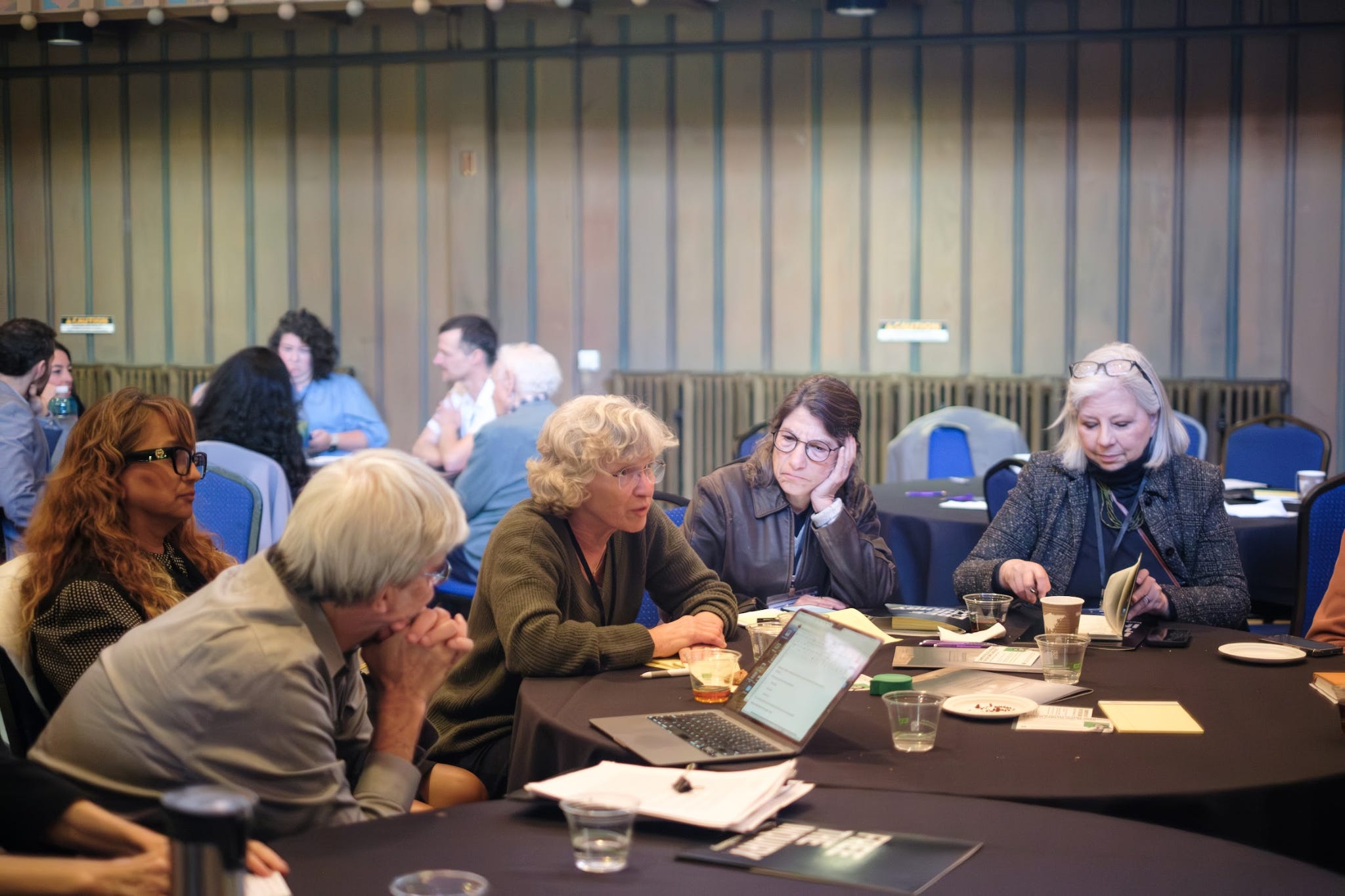
Faculty hiring was a prominent topic all across the conference — how to reduce bias, reward rigor, and establish principles that will stand against shifting partisan winds from any direction. Another theme was relationships with administrators. Half of the conference attendees chose to participate in an “unconference” session to discuss challenges of administrative overreach, and opportunities for principled partnership to improve scholarship, expand viewpoint diversity, all while defending academic freedom.
To Diermeier, the credibility and expertise of faculty make them essential allies in university-wide reform: "The need for faculty like you to get involved, to get organized, to have clear principles, and advocate courageously is essential. Without that it won't happen."
Among Heterodox Academy members on campus, it is happening.