


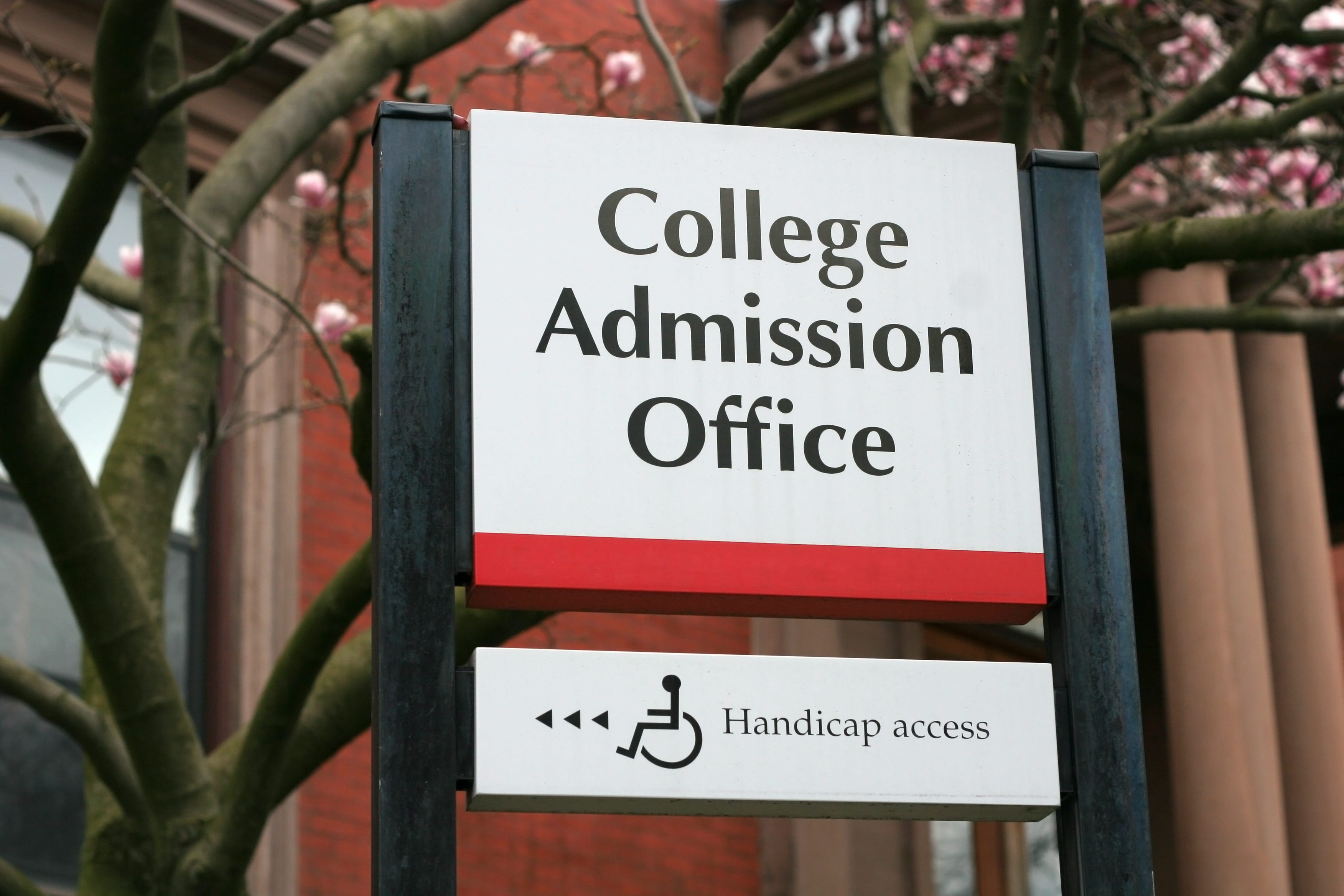
It’s college application and admission season! All across the country, students are submitting their applications to universities, and colleges will soon be reading lots of essays by hopeful future freshmen.
At HxA, we are taking this moment as an opportunity to examine how admissions policies and procedures could contribute to a pluralistic campus environment by recruiting and admitting students from across all spectra of society. Conversely, admissions processes could do the opposite — effectively signaling to students an ideological monoculture and filtering out those who might challenge it. Admissions is a vital lever for creating true academic pluralism.
My personal view on college admissions is that they are opaque. Many campuses explicitly describe a firewall between their admissions offices and the rest of campus, thus limiting the impact that faculty can have on the types of qualities they’d like to see in their students. Obviously, universities want to attract and admit the best students they can find. But admissions offices also have other priorities they’re selecting for, including demographic diversification efforts and a commitment to the university’s values. On the former, we have seen some evidence that admissions essay prompts for American campuses are changing in the wake of recent political and cultural shifts, with some colleges revising or eliminating diversity essay prompts.
My colleague McKay Stangler recently interviewed sociologist Neil Gross about his new book, What Happened to College?
Like McKay, I read the book and thought it was filled with strong ideas that have echoed some of my own thinking about admissions. Gross argues that universities can adjust admissions criteria so that students’ expressed desire for open, reasoned debate is selected for. He notes that starting in 2024, in the wake of protest turmoil on many campuses, Harvard refined its admissions essay prompt, asking students to reflect on a time in which they disagreed with someone and what they took away from that experience. Other schools followed suit the following year (Gross highlights Yale, Columbia, and Duke). This is a big step in the right direction for universities to promote campus cultures of open inquiry.
Aside from this, I have some more suggestions for what campuses can do as far as admissions is concerned.
First, colleges should focus on merit, academic excellence, and critical thinking as paramount in the admissions process. If universities want to emphasize other values beyond academic merit, including progressive political values, then they should state so publicly, though ideally keeping the university’s truth-seeking mission paramount.
Second, colleges can also use this as an opportunity to increase viewpoint diversity through admissions. By this, I do not suggest some kind of quota system or litmus test. I don’t think that campuses should inquire about applicants’ political or religious views and admit more people with right-of-center views. Rather, I suggest targeted recruitment efforts along with clear signals that viewpoint diversity and academic pluralism are core institutional values. Colleges can do outreach to more conservative and religious pockets of the country and encourage high schoolers to apply.
Third, changing admissions standards without also changing norms for campus dialogue could backfire, especially if new students come in expecting a certain set of norms surrounding constructive disagreement and the free exchange of ideas, only to find that administrators put up barriers to those in the name of safetyism.
Relatedly, even if admissions officers select for students who are open-minded and willing to engage across ideological lines, what if the freshmen housing office then allows students to opt-in for roommate assignments with those who have similar worldviews? Doesn’t that defeat the purpose of attempts to recruit students from a diversity of backgrounds? Schools should signal to prospective students that their campus is set up to require them to come into contact with others who have different viewpoints.
Of course, there is a risk that as admissions essays prompt students to explain how open-minded they are, then the only thing that will change is students’ essay content. That is, changing an essay prompt won’t effectively screen for a more tolerant student body, because applicants will just look to game the system and brag about how much they love pluralism, which is a fairly easy thing to do on an essay. But admissions offices can more effectively screen for such traits by selecting based on variables that are much harder to fake. Colleges can admit students with demonstrated behavioral commitment to pluralism, through extracurricular activities, including clubs and organizations (such as a group that invites speakers across the political spectrum to discuss and debate important issues), and through recommendation letters in which referees speak to applicants’ performance when faced with disagreement and their sincere desire to engage with opposing viewpoints. And, while it is certainly the case that some students will try to game the system, we’re also seeing the exact opposite phenomenon playing out, as students opt to apply and enroll in colleges with like-minded peers. Some high school seniors will see essay prompts about constructive disagreement and feel turned off. To that I say, good!
If universities implement these changes successfully, the effects may be far-reaching. In his book, Gross speculates that making changes to admissions criteria to filter for and admit a certain type of open-minded student body may make it easier for students on campus to effectively debate competing ideas, make friends across ideological lines, and seek common ground, all while being less likely to “cancel” each other for expressing disfavored opinions. It’s a nice vision for college campuses. But the positive effects would theoretically extend forward in time, as graduates of these schools practice constructive disagreement in their communities and extend a spirit of collegiality toward their fellow citizens. Gross also suggests that perhaps high schools, upon seeing what top colleges are searching for in their applicants, will make their own set of reforms to create a more pluralistic and tolerant climate, such that teenagers’ academic experiences will be improved even if they never set foot on a college campus. Wouldn’t that be an amazing accomplishment?
